Truth & Consequences: Documentary in the Age of AI — Early Days Meet End Times
Posted on October 7, 2026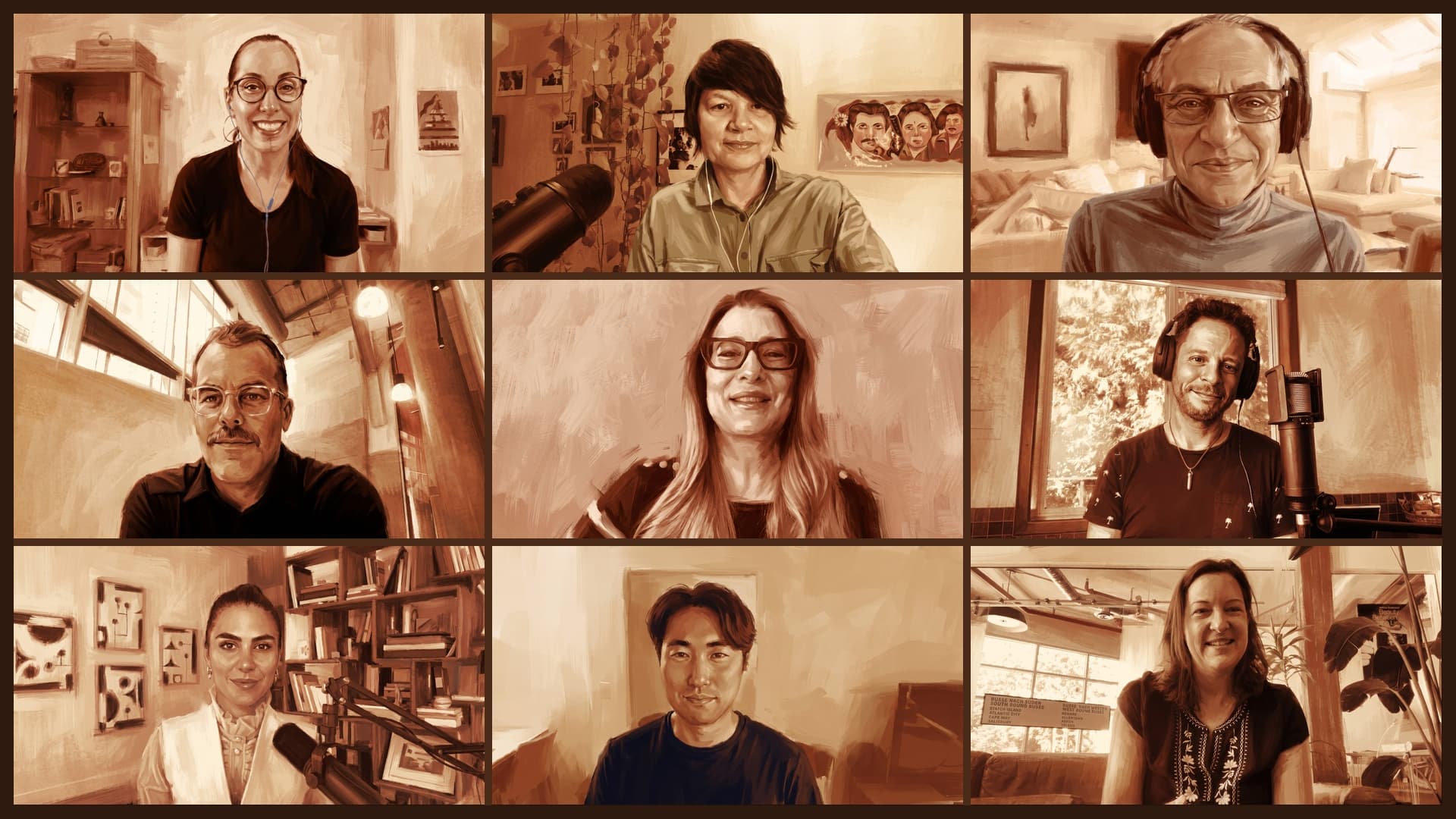
Welcome to the first of three blogs exploring AI in documentary filmmaking. I’m Catherine Warren, host of Truth & Consequences: Documentary in the Age of AI, and your guest blogger for this series. My fascination with the interplay of science and media goes back decades, to my graduate thesis at Columbia Journalism School: “Science in the Studio, Art in the Lab.” Early in my career, I reported from CERN, one of the great interdisciplinary research centres where scientists mingled with technologists and creative thinkers of all stripes, not coincidentally the early home of the World Wide Web! The braiding of disciplines, the ethical challenges, and the heady mix of strange bedfellows run through everything I’ve done since. From co-creating Canada’s first ethical AI accelerator fund, to advising media companies and policymakers, to pioneering advances in fan culture, I thrive on helping others navigate innovation.
Creators are great experimentalists, challenging the limits and the purpose of the tools in their hands. Artificial Intelligence is no exception, yet somehow it’s proving to be exceptional. Join me in finding out why.
When I first started on the development of what became Truth & Consequences: Documentary in the Age of AI the world was already on a steep flightpath with respect to artificial intelligence. Of course, AI engineering moves at lightspeed so this is no surprise when it comes to the tech of it all. Yet the uptake and the discourse were moving just as fast. This felt different from other innovation surges, where we experienced massive lags between software releases or scientific advances and when we ultimately put these to work and criticized them at the dinner table. Think: the Internet, the Web and Social Media. Each took a long time between launch and take-off, and longer still for loud conversations and demands for regulation. For AI, this cycle of rollout to uptake to critique happened overnight.
From Speed-Dial Chatbots to Existential Dread
It was fall 2025, just one year ago, and well after the release of the first large language models, the Writers Strike, and Nobel Prizes awarded to AI researchers. People were already well-attuned to AI’s possibilities and perils. Everyone from kids to pensioners had opinions on whether we were in a hype cycle or a doom scroll. We had ChatGPT on speed dial, concerned that AI would take our jobs, and wondered what made us uniquely human. We laughed at AI memes while battling deep fakes and misinformation. We ping-ponged between awe and awful in real time.
Fast forward to today, and things have accelerated dramatically. From Silicon Valley to your local café, the talk is nuanced and existential.
"The thing with catastrophic events like extinction … is that they're so bad that even if there was only a 1% chance it could happen, it's not acceptable."
— Yoshua Bengio, Canadian AI pioneer, Turing Award winner
More people object to a data centre in their neighbourhood than a nuclear power plant, according to a May 2026 Gallup Poll. From Yahoo News to India’s The Wire to the legal newspaper the Daily Journal, headlines call AI a “Thirst Trap” that competes with humans for precious resources. Protesters across North America object to data centres guzzling water while droughts drain communities. When it comes to job loss, even mathematicians are weighing in, challenging not just the end of certain industries but the end of meaning in work. When AI took just eighty-eight hours to solve a math problem no one had cracked in two centuries, Fields Medal recipient Terence Tao warned that the indiscriminate use of AI is turning his subject into "a meaningless production quota game.” These are the stories of our times.
The Creator’s Dilemma: Democratic Tools vs. AI Slop
Whether you are a producer telling the story of AI, or using AI to tell your story, you will want to weigh in and consider the pros and cons for AI in your craft. The tools have knocked down real barriers. A filmmaker with no budget can animate a still photograph, score a scene, and attract an audience only a studio marketing department could once reach. Production costs could fall by as much as 70%. New creators who’ve never held a camera are making work that moves people. The catch is that AI was trained on human-made art, including stolen content. Left to themselves, these models drift toward the average at best and AI slop at worst. Leaders in the filmmaking community scrambled to respond. Cannes drew its line in April, barring work where AI drives the script, the visuals or the performances from competing for the Palme d'Or.
“A film is not an assembly of data, it is a personal vision.”
— Iris Knobloch, Cannes Film Festival President.
Nevertheless vision is the one thing the tools cannot supply, and vision is the purview of us all.
So, whether you make the tech or use the tech for whatever you create, everyone’s a moment to moment expert and a rank beginner.
25 Years of Innovation, Culture and Technology
The making of Truth & Consequences coincided with the 25th anniversary of my business FanTrust, work at the intersection of innovation, culture, and technology. In many ways this talkshow is a celebration of themes I’ve explored since its founding. What do creators need from machines? How does tech change the stories we tell and the ways in which we tell them? What do audiences expect from each new form of entertainment and interactivity? And where do trust, ethics, and integrity fit in the mix?
Inside the Series: Episode Guide
Episode 1 kicks off with The Story & The Storyteller, a focus on documentary subjects, truth in story, and responsibility behind the camera.
Episode 2 is all about AI in Development & Innovation, you’ll hear from the National Film Board and filmmaker Mark Achbar (The Corporation, Manufacturing Consent) as we explore humanity’s love affair with “death tech.”
Episode 3 discusses Marketing & Community-Building, with a look at how creators are using agentic AI to reach new audiences, and how local meet-ups bring together the AI savvy and the AI skeptics.
Episode 4 wraps the series with Editing & Sound as we dive into voice cloning and AI music, including the thorny issues of rights and permissions.
Across four unscripted, deeply human episodes, a compelling arc emerged: Canadians are uniquely positioned to grapple with AI and creativity. We invented the public documentary as a civic tool, and we are also global leaders in responsible artificial intelligence—we are home to a community of ethical practitioners building something remarkable right here. Truth and Consequences is where documentary and responsible AI meet, and I invite you to join the conversation.
How to Watch
You can watch all episodes of Truth & Consequences: Documentary in the Age of AI on TELUS Optik TV Video on Demand and YouTube starting Oct 7, 2026. Check back for 2 more blogs to come from Catherine Warren on November 9 and December 7.
For more on the topic of media innovation, let’s stay connected https://www.linkedin.com/in/ceowarren.
---
Author Bio
FanTrust President Catherine Warren is an international media-tech executive and creative economy strategist, with 25 years at the intersection of innovation, culture, and trust. She has overseen more than $8B in high-impact investment to Canada since 2018 through leadership roles including CEO of the Vancouver Economic Commission, and oversight of the Vancouver Film Commission. Catherine is a co-creator of Canada’s first ethical AI accelerator fund, co-developed a $100M fair-use marketplace for AI training rights, and advises global media companies, governments, and venture partners on AI innovation, monetization, and digital governance. Catherine serves as Canada’s representative on the International Emmy Nominating Committee and as an Adjunct Faculty Fellow at University of Canterbury, serving on the Advisory Board of Kōawa Studios, New Zealand’s production and innovation campus for TV, film, games and emerging tech.