Luke Redgrove’s Powerful Short Film Examines the Turntable of Life
Posted on May 28, 2026
We all recognize life doesn’t unfold in clean, straight lines. It often feels more like we’re moving in cycles or loops. Like a turntable, if you will.
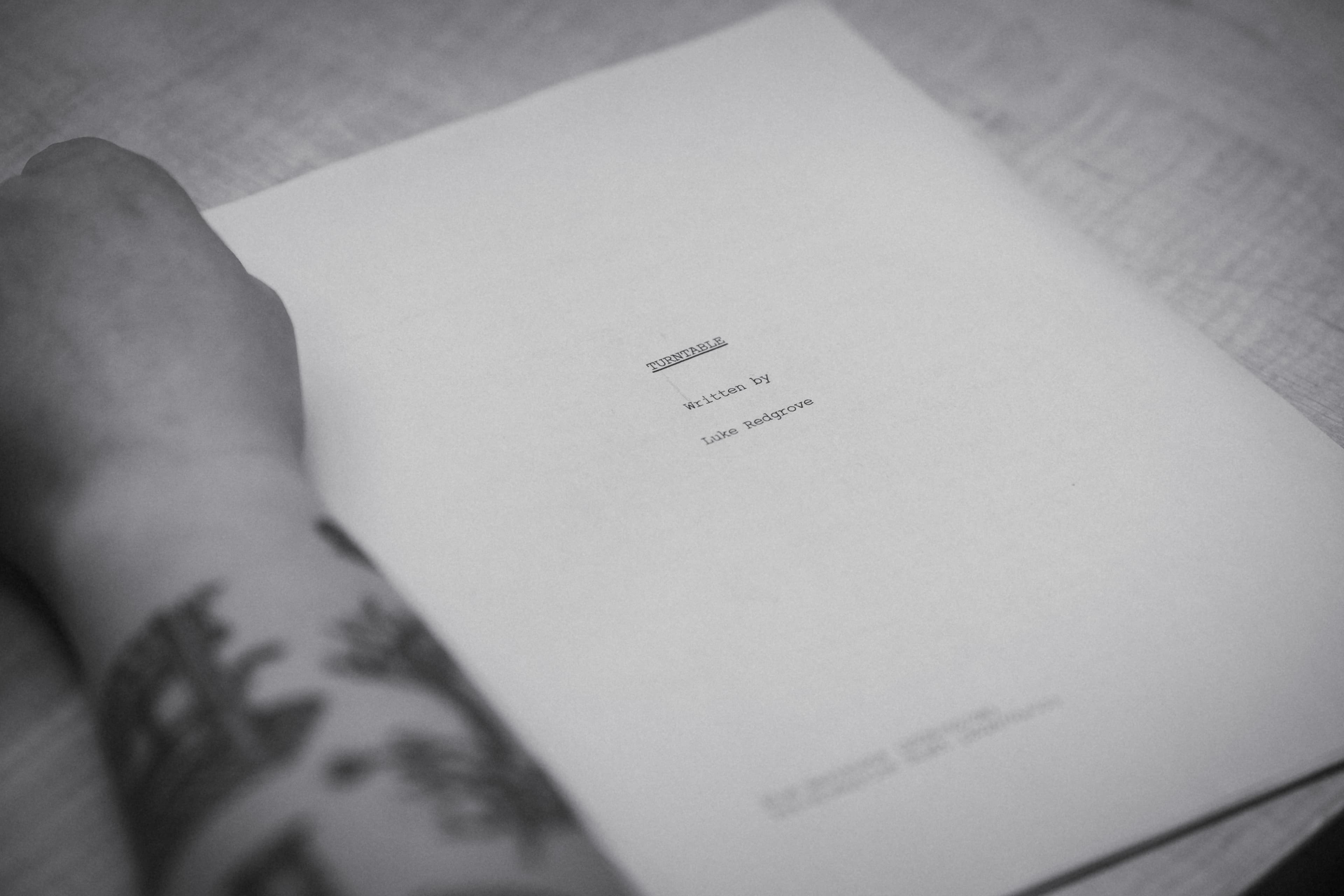
In the TELUS STORYHIVE Pan-Asian Storyteller Edition film Turntable, Luke Redgrove explores how our physical environments—from our lived experience, upbringing, culture and relationships—can influence the ways we move through life, and how it’s normal for progress to feel anything but linear.
Turntable follows a young woman navigating isolation, creativity and relationships, while quietly confronting the tension between who she is and who she’s expected to be.
We spoke with Luke about his inspiration behind the film, what it was like being a first-time director and the philosophical questions we all ask ourselves.
STORYHIVE: Tell us about yourself and your background!
Luke Redgrove: My name is Luke Redgrove. I grew up in Kamloops, British Columbia. I currently work as a lab technician at Thompson Rivers University. Last summer, I took unit stills for another STORYHIVE production; that’s when I was first introduced to STORYHIVE.
I noticed there was a grant opportunity, so I submitted a script I had written and got lucky. And now I’m here making a short film!
STORYHIVE: What sparked the idea for your film, Turntable?
Luke Redgrove: I started writing it during my undergrad. I majored in philosophy, and the story for the film was built around ideas about free will. In Western culture, it’s common to dualize the mind and body, to treat them as separate. There’s this stoic idea that you can overcome your physical environment through mental strength. But my philosophy class talked about the opposite: that we are physical beings shaped by our environments, cultural upbringing and lived experiences.
I wanted to write something that reflected that. So the main character, Hannah, is someone who’s lived in isolation and is questioning her path. The “turntable” idea is that she’s caught in a loop and trying to deviate from it, but doesn’t have the tools to do so because her environment doesn’t support change.
At its core, it’s a story about a young woman who wants to become an artist and begins to consider ending her relationship as part of that process.
STORYHIVE: There’s often a societal pressure to “beat the turntable,” like you’re doing something wrong if your progress isn’t in a straight line. Can you talk more about the film’s title and what the turntable represents?
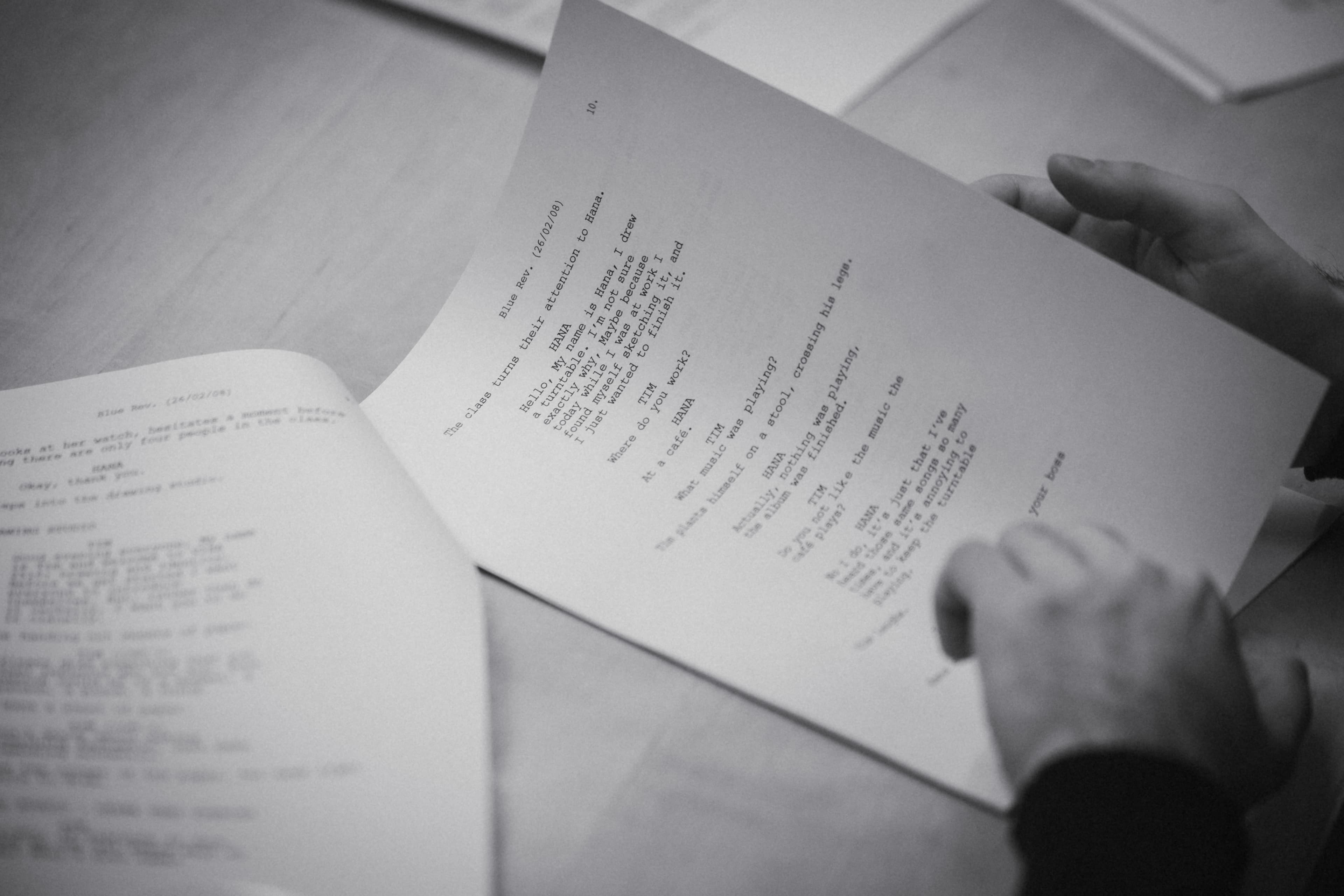
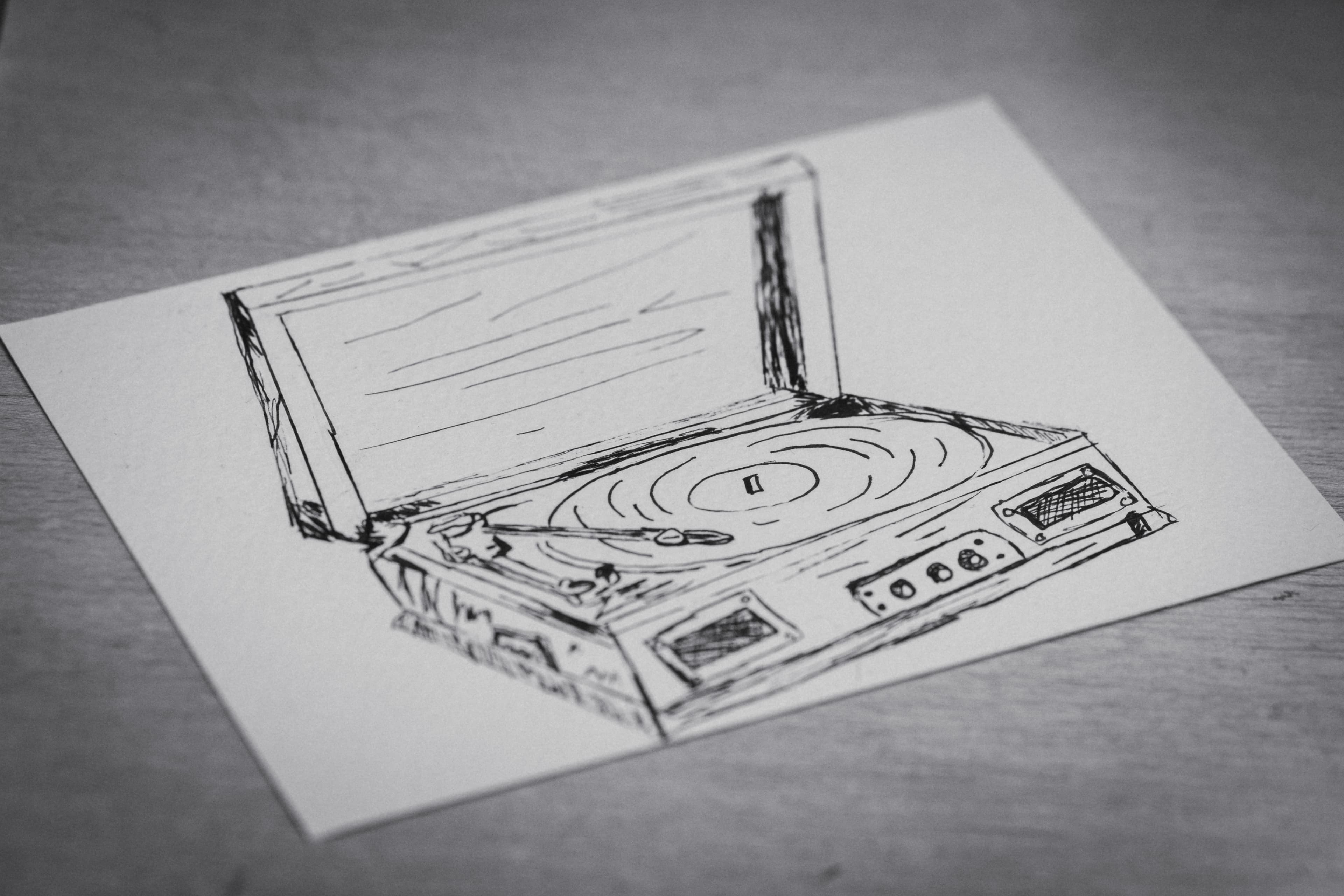
Luke Redgrove: Originally, the script was very different, but the turntable felt like such a rich object symbolically. I actually got one to experiment with! My dad helped me learn how to use it. It’s a great sound system, but also finicky. You have to handle it carefully, keep the vinyl clean and be intentional with it. That interaction inspired me. The turntable reflects the loop the main character, Hannah, is in.
It also reflects her relationship with another character, Daniel. He’s going into law school, which represents stability and a “good future” from the outside. Hannah is in a supportive role, like many women often are in relationships, but her own needs aren’t being met.
People see a turntable and think it’s elegant or nostalgic, just like they see law school as inherently successful. But they don’t always see the labour behind maintaining those systems, whether it’s a relationship or a career path.
STORYHIVE: Your film highlights female creatives and East Asian women and their journeys. Why was it important for you to centre those voices, and what have you learned while filming?
Luke Redgrove: It connects to the central theme. I think women who are marginalized are often heavily shaped by their environments and are less “free” than more privileged individuals.
It was important for me to focus on a character under a lot of external pressure. It’s not a traditional happy-ending story; it’s more a realistic look at what change actually looks like, given someone’s physical and social conditions.
STORYHIVE: Why do you feel it can be so hard to separate who we are from who others expect us to be?
Luke Redgrove: It comes down to how we form knowledge and experience. From a young age, we’re constantly interacting with our environment—seeing, touching, experiencing things and building interpretations based on that. Those experiences shape us, including painful ones that might come from people we love.
I’m interested in how those experiences shape and sometimes hold people back, and I want to approach that with sympathy rather than judgment. I think I disagree with the idea that people just need to “be stronger” and overcome everything.
STORYHIVE: What do you want audiences to take away from the film?
Luke Redgrove: I would love for the film to make people feel seen in whatever struggles they may have. As much as it’s nice to have an inspiring story of someone changing or becoming a better person, I think change doesn’t always happen in a linear way. It happens over time, where you go through phases of improving and then maybe fall back into bad habits.
So with this film, I wanted to show that, like the turntable, you can change a record, expose yourself to a new environment, but you’re still going around in a loop, right? You still have to go to work or navigate complicated relationships.
So it’s not as easy as just breaking away from your environment; it’s still shaping you. It’s more about whether your awareness of that environment can propel you forward.
STORYHIVE: What has it been like joining STORYHIVE and going through this filmmaking process? What surprised you?
Luke Redgrove: I’ve always wanted to be a filmmaker, but I didn’t end up going down that path originally. Suddenly, I found myself making a short film!
A big realization was how vulnerable scriptwriting is. You don’t always mean to reveal things about yourself, but authentic storytelling often requires it. I’d be reading scenes and thinking, “Oh wow, that’s actually very revealing.”
The other major learning was logistics. As a director, you have to stay connected to every department and communicate clearly with everyone. It’s extremely demanding on your time, but necessary for collaboration.
STORYHIVE: Were there any films or directors that inspired you during this process?
Luke Redgrove: Yes, and I have to credit my mentor, Karen Lam, for encouraging me to seek inspiration. Because this is part of the TELUS STORYHIVE Pan-Asian Storyteller Edition, I looked at Asian filmmakers.
Two big inspirations were Riceboy Sleeps and Past Lives. I loved the cinematography, tone and realism of those films. More importantly, they tell authentic, grounded stories that feel lived-in. That kind of storytelling really resonates with me.
STORYHIVE: What advice would you give to others making their first short film?
Luke Redgrove: Enjoy the process! It’s easy to get discouraged when things go wrong, whether it’s locations falling through or actors being unavailable, but if you step back, you realize you’re doing something you’ve always been passionate about.
You meet new people, learn constantly and build something from nothing. That’s really special, so it’s important not to lose sight of that, and to have fun with it.
STORYHIVE: What’s next for you?
Luke Redgrove: We begin production on Turntable really soon, so at the moment, that’s where all my focus is, but it would be a dream to expand the story into a feature. There’s a lot more to explore with the character beyond where the short film ends. We’ll see what happens. I’m really grateful we’ve gotten to the point of making this short film.
Join us in celebrating Luke’s incredible success! Stay tuned for the release of Turntable and all other TELUS STORYHIVE Pan-Asian Storyteller Edition films in 2027.